
By Siena DiSalvo, Susan Reynolds, Yarah Kalae & Olivia Parrott, Policy and Science Coordinators at Protect Our Breasts
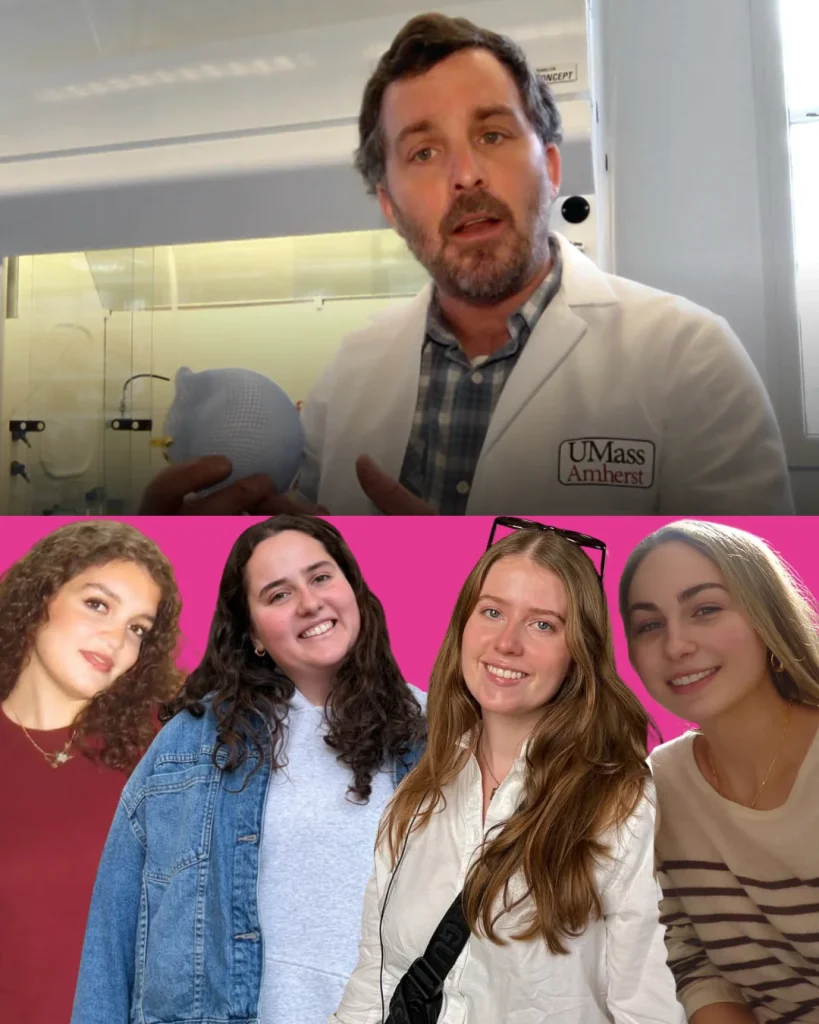
“Environmental health is about opening our eyes to all of the things that are around us that affect us, whether we know it or not. And so that includes things like water pollution and air pollution, vector-borne diseases, radiation, all things that we interact with every day, but we usually forget about because they’re just a part of our world” –Dr. Richard Peltier
In honor of STEM Day, the Protect Our Breasts’ policy and science coordinators connected with a leading voice in environmental health to share expert insights into the chemicals impacting everyday lives around the world.
We are proud to interview Dr. Richard Peltier, a tenured Professor of Environmental Health Sciences at the University of Massachusetts Amherst, with extensive experience researching toxic pollutants and their effects on human health. He teaches the Introduction to Environmental Health course that informs and guides many students toward careers in the field. His research is focused on air pollution and applying advanced aerosol characterization methods toward understanding the mechanistic effects of these pollutants on human health. Together, we talked about everyday consumer products, the importance of air pollution indoors, occupational health risks, how people are disproportionately affected, and the recent shake-ups in the environmental health field.
Practical and Accessible Ways to Reduce Everyday Exposures
Often without realizing, many of our everyday products may contain cancer-causing substances (carcinogens) and endocrine-disrupting chemicals (EDCs), which interfere with normal hormone function, cause oxidative stress, and can decrease immune function. With Dr. Peltier, we discussed practical and accessible steps to reduce our exposure and protect our health.
Ideally, we could completely avoid products containing dangerous ingredients. However, finding and affording safer alternatives can be challenging, especially when many products that contain toxic chemicals serve practical purposes. Dr. Peltier noted how the most important mechanism of limiting exposure to harmful ingredients in everyday consumer products is by minimizing cumulative risk by using these items less.
One way to limit exposure to toxic chemicals is by opting for more natural alternatives, many of which are just as effective as the store-bought products. For instance, vinegar can be used as an alternative for common herbicides, like Roundup. When herbicides are sprayed in our yards, the toxic chemicals can linger in the air and settle on surfaces, increasing an opportunity for skin-contact exposure. Vinegar is a great safer swap for both yard maintenance and household cleaning as an effective dish detergent.
Additionally, opting for organic foods and beverages is another way we can attempt to reduce our exposure to dangerous substances. The pesticides used to treat non-organically grown foods may contain EDCs and carcinogens. While it is not always feasible to only eat organic foods and the overall cumulative exposure to toxic chemicals is not dramatically reduced, it is one step in limiting the amount of pesticides and toxic chemicals we ingest.
Indoor Air Pollution and Unequal Exposures Globally
Beyond the chemicals found in everyday products, Dr. Peltier emphasized that environmental exposures dramatically differ around the world and experience of pollution burdens is greatly unequal. When thinking about how the environment impacts people’s health, we need to think about it in two parts. The global north and the global south. For example, the type and quantity of chemical exposure in the United States are very different from Kazakhstan. Dr. Peltier states that in the Global North, we see that socioeconomic status plays a huge role. Lower income households tend to live in more polluted areas, near industrial and chemical factories, increasing toxic chemicals in their environment.
This inequality is what we call environmental racism, when marginalized communities bear the brunt of pollution and its health impacts. Upon comparison, wealthy communities do not often bear these environmental burdens.
Global South
In many regions of the Global South, indoor air pollution from traditional cooking and heating practices remains a leading contributor of public health concerns. Heating systems from biomass products including wood, dung, and grass produce an enormous amount of smoke in shelters with limited ventilation. Globally, cooking is commonly done on the most polluting cooking stove: the three stone cook stove. Further, the burden of this indoor exposure from cooking and heating systems falls on women and children in the global south, who do the majority of unpaid care work.
“A woman cooking on a traditional stove in an unventilated room is exposed to the equivalent of more than a hundred cigarettes a day.”
– Caroline Craido Perez,
Invisible Women: Data Bias in a World Designed For Men
There are solutions, like switching to alternatives such as ethanol or LPG, which burns cleaner than traditional fuels. Biomass stoves also use less fuel, but they haven’t shown meaningful improvements in reducing exposure or improving health outcomes. Dr. Peltier points out that even though LPG is still a fossil fuel, using something like an LPG BBQ-style grill would be far less harmful than the three-stone cookstoves many families rely on, especially for young children.
But these solutions come with a high cost. Adopting cleaner technologies requires high economic investment, one that many communities simply can’t facilitate. Without financial support and infrastructure, these cleaner options remain out of reach for the people who need them the most.
Global North
In the Global North, some of the most significant health risks can actually come from the indoor air as well, which can at times be more polluted than the air outdoors. Most people spend about 80–90% of their day indoors, making the quality of the air inside our homes incredibly important to our overall health. Yet, many everyday household products introduce indoor air pollution. As Dr. Pelletier explains, their safety and impact depend on the specific product and how often it’s used.
In the Global North, hookah and cigarette smoking is profound in the indoor environment. Biomass burning for drug consumption initiates chemical reactions that produce products like benzenes, which are carcinogens. Indoor smoke sources increase long-term exposure to various toxic chemicals. However, we still do not fully understand the cumulative effects of indoor exposure.
Compared to cigarettes, vaping generally poses a decrease in overall risks to both the user and bystanders, since its main purpose is to deliver nicotine through vaporization rather than burning. However, many flavored vaping liquids contain flavors that can potentially form toxic chemical byproducts. While vaping produces less smoke and fewer unburned particles—since about 20% of inhaled nicotine is absorbed and less is exhaled—it does not mean that vaping is risk-free.
Occupational Exposures and Beyond
We can also look at environmental exposures from two distinct populations: the civilian versus the working community. Workers around the world are at a higher risk of adverse health effects depending on their workplace with varied occupational hazards. One example Dr. Peltier notes traffic workers who experience compounding exposures of air pollutants from car exhaust.
Another major concern is when occupational hazards are transferred to the surrounding communities which can be the case with factories using Ethylene oxide. It is a known carcinogen that is widely used to sterilize medical devices (surgical instruments, catheters, implants), pharmaceutical products (spices, herbs, cinnamon, drugs), and consumer goods (mattresses, pillows, toys). More generally, Ethylene oxide is a highly effective chemical against a wide range of microorganisms. It’s important to limit carcinogenic chemicals in our medical devices as we have seen with the recently passed California Toxic-Free Medical Devices Act, which bans DEHP from IV-bags and IV tubing. The risk of compounding exposure faced by civilian communities around medical device sterilization factories is immense.
A subsequent issue remains with many factories mandatory aeration procedure of ethylene oxide gas chambers for hours following use. But where is this carcinogenic gas going? It’s aerating out factory windows and into the surrounding civilian communities. Dr. Peltier notes how these communities experience adverse health effects from substantial exposure including higher rates of blood and lymphatic cancers. While workers have the autonomy to decide to work in sterilization factories, the surrounding community members do not have a say in the environmental toxins they are unknowingly exposed to. Dr. Peltier notes the difficulty of environmental health legislation in this area due to the need for clean medical devices to save lives outweighing the cost of sterilization causing cancer.
Advocacy
Dr. Peltier emphasized the importance of his lab partners working with local advocacy organizations to be the eyes, ears, hands and feet on the ground, especially when resources are limited. He noted that when investigating lab sites, our ”ears should be twice as big as our mouth” because locals are the true experts with first-hand experiences of environmental harms. A core part of Dr. Peltier’s lab is capacity building, giving communities the knowledge and tools to understand their exposures and advocate for change. This approach reflects the same mission of Protect Our Breasts in raising awareness, empowering individuals to make safer choices, and using science and policy to drive prevention.
Political Impacts on Environmental Health
Environmental exposure is not shaped by science and geography alone. Political decisions greatly influence how health risks are understood, regulated, and addressed. Since the new administration took office in January, much has changed.
Historically, independent scientists have shared their research to better inform civil servant scientists working for the government. The collaboration between these scientists have since been silenced by the new administration with large firings across the executive branch and dismantling of the long-standing scientific apparatus. The new administration is also pushing to restore “Gold Standard Science” which permits politicians to push for unethical scientific research processes. These include eliminating anonymity for research study test subjects in favor of “transparency” through the release of subject’s identifiable personal information.
Dr. Peltier highlighted how demoralizing these changes are to scientists who have dedicated their lives to solving global problems, while commending institutions like UMass Amherst that have resisted federal pressure to discontinue DEI and health inequity research.
Moving Forward
Overall, environmental health is interconnected, from the consumer products in our homes, to the air we breathe indoors and out, to our workplaces, and to communities disproportionately burned by pollutants. While toxic chemicals may seem invisible, the impacts on human and environmental health are far from it. Through science driven policy, we can reduce risk and push for systemic changes that benefit all. Protect our Breasts shares this mission: empowering individuals to make safer choices while driving collective change and prevention. This interview leaves us confident and hopeful that we are moving closer to a future where all people regardless of income, occupation, or geography, have the right to live in an environment that protects their health rather than harms it.
Interested in learning more about environmental health science and taking action? Visit staging102125.aureliayee.com/ to connect with your local chapter or start one on your own campus.